Archives
- 2026-11
- 2026-10
- 2026-09
- 2026-08
- 2026-07
- 2026-06
- 2026-05
- 2026-04
- 2026-03
- 2026-02
- 2026-01
- 2025-12
- 2025-11
- 2025-10
- 2025-09
- 2025-03
- 2025-02
- 2025-01
- 2024-12
- 2024-11
- 2024-10
- 2024-09
- 2024-08
- 2024-07
- 2024-06
- 2024-05
- 2024-04
- 2024-03
- 2024-02
- 2024-01
- 2023-12
- 2023-11
- 2023-10
- 2023-09
- 2023-08
- 2023-07
- 2023-06
- 2023-05
- 2023-04
- 2023-03
- 2023-02
- 2023-01
- 2022-12
- 2022-11
- 2022-10
- 2022-09
- 2022-08
- 2022-07
- 2022-06
- 2022-05
- 2022-04
- 2022-03
- 2022-02
- 2022-01
The physiological effect of adenosine is
2023-01-14
The physiological effect of adenosine is now considered a new direction in halting the progression of organ damage in cardiovascular disease [24], [25], [26]. Adenosine has diverse functions, depending on its interaction with different receptor subtypes: A1, A2A, A2B, and A3[24], [25], [26]. Stimula
Finally one can ask whether these results throw any
2023-01-13
Finally, one can ask whether these results throw any light on the nature of the target in SNMG patients. Interestingly, the results of the in vitro incubations suggested that SNMG sera might increase AChR expression to a small extent, raising the possibility that SNMG patients, who have thymic chang
br Conflict of interest statement br Benign prostatic hyperp
2023-01-13

Conflict of interest statement Benign prostatic hyperplasia (BPH) is a highly complex process characterized by an increased number of epithelial and stromal TCS PIM-1 1 in the transition zone. , , Autopsy studies by McNeal detail the evolution of histological changes within these 2 cellular com
Another contributor for the G M arrest in A and
2023-01-13

Another contributor for the G2/M arrest in A549 and H1299 cells might be p21WAF1/CIP1 which was up-regulated upon ovatodiolide treatment. p21WAF1/CIP1 is a common CDKs inhibitor which blocks SU6656 G2/M phase progression in various types of cancer cells (Kim et al., 2015, Liberio et al., 2015). It h
Finally microRNAs miRNA seem to
2023-01-10

Finally, microRNAs (miRNA) seem to play an important role in AR signaling in BC. Some authors have described a differential amphetamine sulfate mg of miRNAs in AR-positive BCs compared to AR-negative ones. VEGF and mTOR pathways were also reported as implicated in miRNA dysregulation, suggesting a c
Another class of AMPK regulator is
2023-01-10
Another class of AMPK regulator is peptidyl-prolyl cis/trans isomerase (PPIase) NIMA-interacting 1 (Pin1), which binds to a number of proteins and regulates oncogenesis and metabolic diseases (Khanal et al., 2013; Zhou and Lu, 2016). Pin1 has been shown to bind to and inhibit AMPK; therefore, at lea
br Alzheimer s disease AD
2023-01-10
Alzheimer’s disease (AD) is an irreversible, age-associated neurodegenerative disorder that is characterized by progressive memory loss and cognitive decline. AD is also the leading cause of dementia, accounting for 5 million cases in the United States and 44 million cases worldwide. In 2015, AD c
Recently two distinct small molecule inhibitors of PHGDH wer
2023-01-10
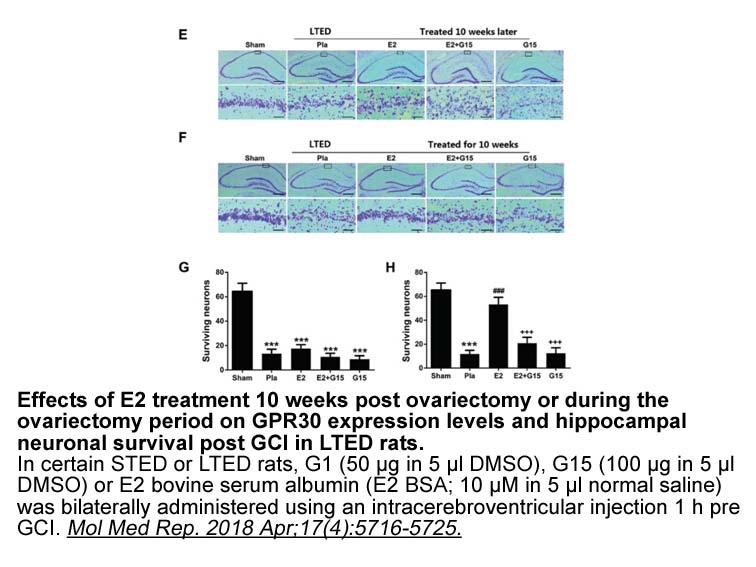
Recently, two distinct small-molecule inhibitors of PHGDH were identified using high-throughput screens, both of which inhibit de novo serine biosynthesis and show selective toxicity to cancer ORY-1001 synthesis with high SSP flux [50,51]. The inhibitor NCT-503, which has an IC50 of 2.5μM, reduces
GSK2194069 br Conclusion br Introduction The identification
2023-01-10
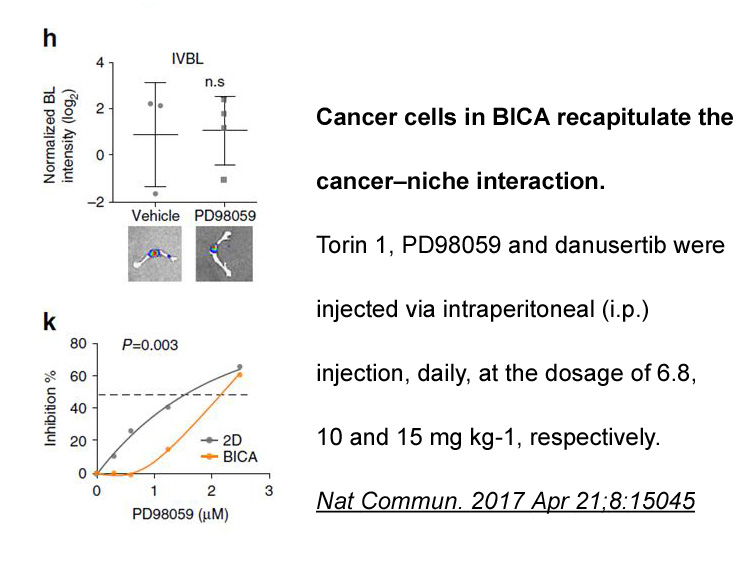
Conclusion Introduction The identification of Alzheimer's disease (AD) biomarkers and their ability to measure pathology antemortem has led to a fundamental reconsideration of the pathogenesis of AD. The importance of biomarkers was already reflected in revised diagnostic criteria proposed by
br Regulation of AHR Activity
2023-01-10

Regulation of AHR Activity AHR activity is regulated in various ways. First, AHR protein levels are controlled via ubiquitin-mediated proteosomal degradation: Ligand binding induces AHR ubiquitination and subsequent degradation by the proteasome [5]. AIP, a component of the AHR chaperone complex,
Regarding the HT B receptors they act as terminal receptors
2023-01-10
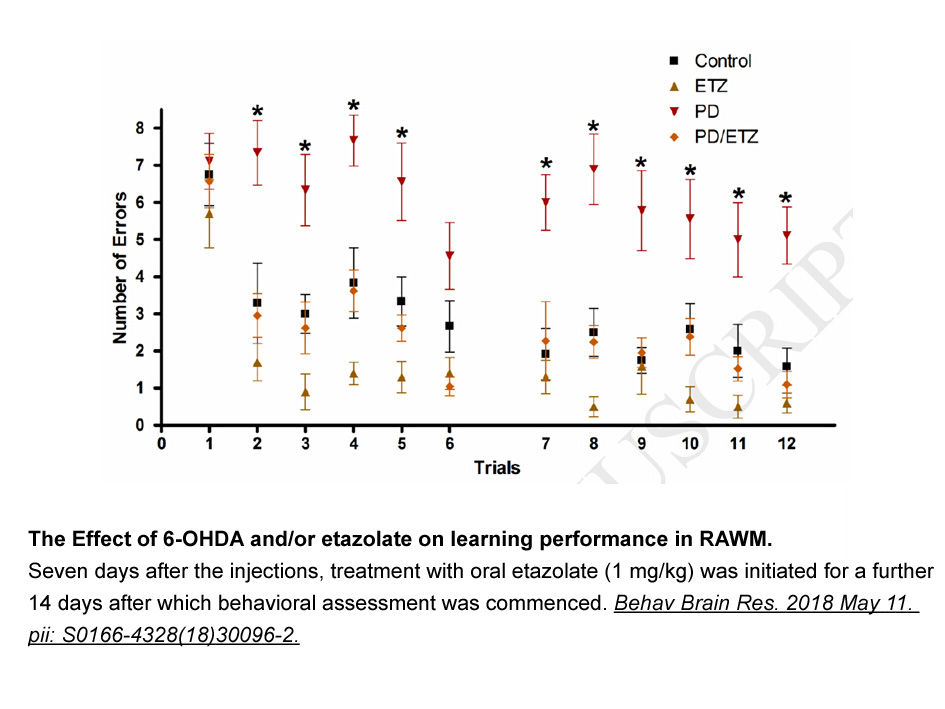
Regarding the 5-HT1B receptors, they act as terminal receptors and are involved in the presynaptic regulation of the release of 5-HT. But at spinal level these receptors are principally situated post-synaptically (Sari, 2004). The ability of autoreceptors to regulate extracellular levels of 5-HT dur
The results also showed that the A receptor
2023-01-10
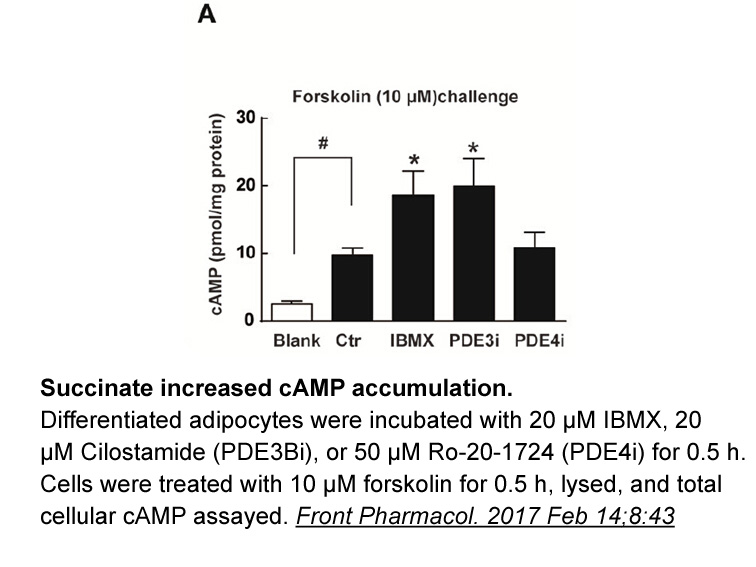
The results also showed that the A3 receptor agonist increased the phosphorylated levels of Akt, leading to activation of the PI3K/Akt pathway. A3 Methyllycaconitine citrate stimulation has protective effects against RGC death following ischemia-reperfusion, glutamate toxicity, and optic nerve tran
br Actin cytoskeleton in protrusion Pushing force driving
2023-01-10
Actin cytoskeleton in protrusion Pushing force driving membrane protrusion is generated by polymerizing Melittin filaments organized either into branched networks or parallel bundles. Branched networks are assembled through Arp2/3 complex-dependent actin nucleation and drive protrusion of lamell
In fact serotonin is a
2023-01-10
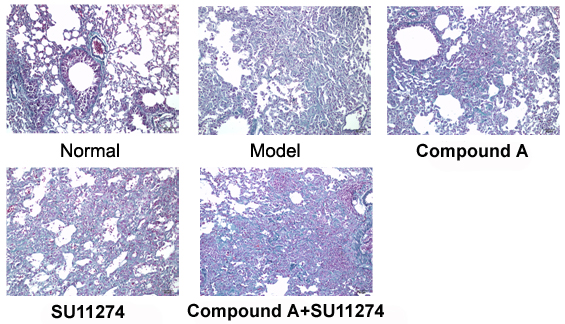
In fact, serotonin is a major modulator of dopaminergic (DA) neuronal activity through the 5-HT2C receptor. Studies have shown that the selective 5-HT2C receptor agonist Ro60-0175 blocks the burst-firing of mesolimbic DA neurons, which project from the ventral tegmental area (VTA) to the nucleus acc
br Disclaimer br Conflicts of interest br Role of the
2023-01-10
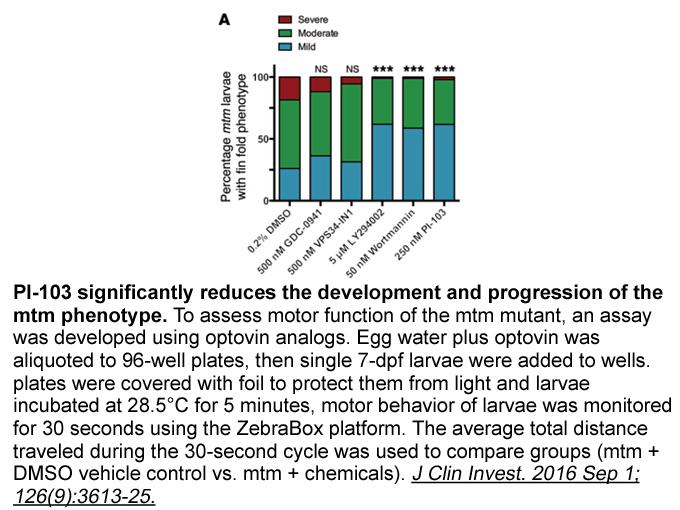
Disclaimer Conflicts of interest Role of the Sponsor Acknowledgements Funding/support: This project was supported by a grant from the Department of Surgery (R5129), Western University and by the Institute for Clinical Evaluative Sciences (ICES) Western site. ICES is funded by an annual g
8502 records 398/567 page Previous Next First page 上5页 396397398399400 下5页 Last page